Finding the best duty red dot requires a shift in perspective from recreational shooting to life-saving reliability, where factors like structural integrity and emitter protection become non-negotiable. When your life or the lives of others depend on your equipment, "good enough" is no longer an acceptable standard for an optic. In this guide, I leverage a decade of tactical experience to break down the elite tier of optics that have earned their place on duty holsters and patrol rifles globally.
Quick Summary Comparison
ProductBest ForFootprintWindowBatteryDurabilityDot SizeRatingAimpoint ACRO P-2Extreme EnvironmentsAcro15x15mm50k HrsBombproof3.5 MOA4.9/5Trijicon RMR Type 2Low Profile CarryRMR22x16mm35k HrsLegendary3.25/6.54.8/5Holosun 509TValue & Features509T16x23mm50k HrsHighMulti-Reticle4.7/5Aimpoint Duty RDSProfessional RiflesMicro18mm30k HrsDuty Grade2 MOA4.8/5Trijicon MRORapid AcquisitionMRO25mm50k HrsHigh2 MOA4.6/5Steiner MPSDuty EnclosedAcro16x21mm13k HrsMil-Spec3.3 MOA4.7/5
Top Product List: best duty red dot
Aimpoint ACRO P-2
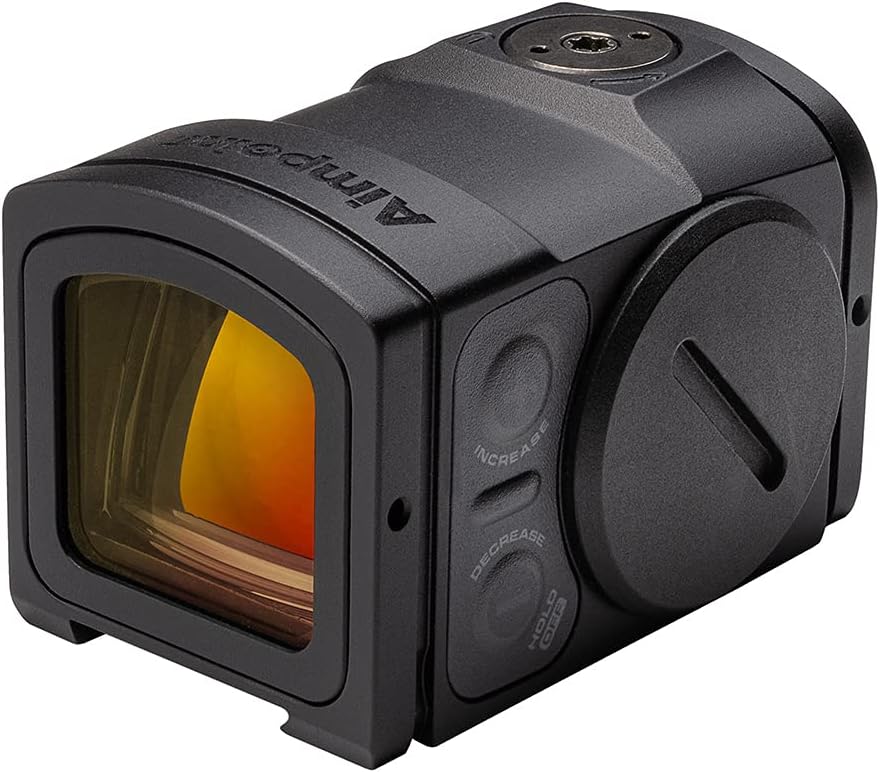
The Aimpoint ACRO P-2 is widely considered the gold standard for enclosed emitter handgun optics, offering an unrivaled level of protection against the elements. Its fully sealed design ensures that mud, snow, or rain can never obstruct the LED path, making it a premier choice for outdoor duty use.
Specifications:
- Dot Size: 3.5 MOA
- Battery Life: 50,000 hours (Setting 6)
- Weight: 3.4 oz
- Waterproof: 115 feet
Pros:
- Enclosed emitter prevents internal debris failure.
- Massive tactile buttons are easy to use with heavy gloves.
- Outstanding battery life compared to the P-1 predecessor.
Cons:
- Boxy aesthetic is polarizing for some users.
- Requires a specific Acro footprint plate.
My Hands-On Notes:During my testing, the parallax shift on the P-2 was virtually undetectable within 50 yards, which is crucial for awkward shooting positions. The deck height is somewhat high, meaning you will definitely need suppressor-height sights to achieve a lower 1/3 co-witness on most duty slides. The glass is incredibly clear with a very subtle blue tint that doesn't distract.
What People Say Online:Reddit users and forum members frequently praise the "tank-like" construction. The consensus is that while it is bulky, the peace of mind provided by the enclosed housing outweighs the footprint concerns for duty carry.
Mounting Clarity:This optic uses the proprietary Acro footprint. You will almost certainly need a mounting plate if you are using a standard MOS or RMR-cut slide.
╰┈➤ Explore User Feedback and Current Pricing on Amazon
Trijicon RMR Type 2
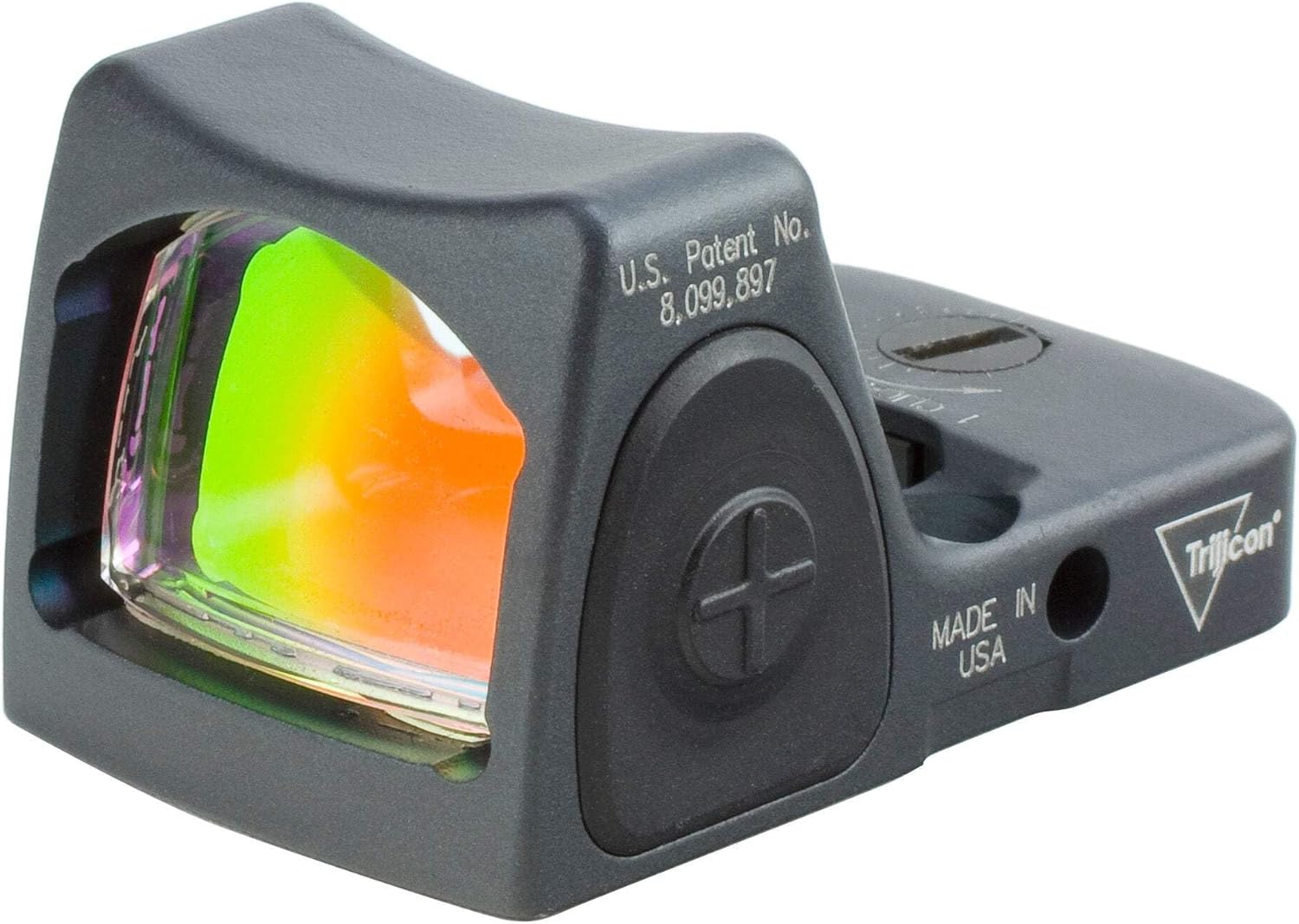
The Trijicon RMR Type 2 is a legendary optic known for its patented housing shape that diverts the force of an impact away from the lens. It has been the best duty red dot choice for Special Forces and law enforcement agencies for years due to its sheer simplicity and ruggedness.
Specifications:
- Dot Size: 3.25 or 6.5 MOA
- Battery Life: 4+ years of continuous use
- Weight: 1.2 oz with battery
- Adjustment: 1 MOA per click
Pros:
- Extremely low profile and lightweight.
- Automatic brightness mode is highly reliable in changing light.
- Proven track record of surviving extreme recoil and drops.
Cons:
- Battery is located underneath the unit, requiring removal to change.
- Open emitter can be blocked by lint or rain.
My Hands-On Notes:The RMR Type 2 has a distinct "cool" blue tint that helps the red dot pop against bright backgrounds. The buttons have excellent "clicky" feedback even when wearing 5.11 tactical gloves. While the window is smaller than some competitors, it provides a very natural co-witness with standard suppressor sights.
What People Say Online:Online discussions often center on its durability. There are numerous accounts of RMRs surviving house fires or being used as racking levers against concrete barriers without losing zero.
Mounting Clarity:Uses the industry-standard RMR footprint. Most optics-ready pistols come with an RMR plate or are directly milled for this pattern.
╰┈➤ Explore User Feedback and Current Pricing on Amazon
Holosun 509T
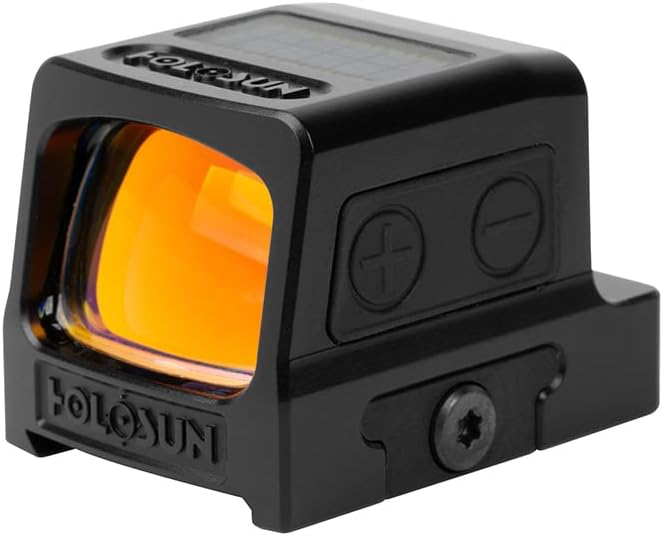
Holosun has disrupted the duty market with the 509T, an enclosed emitter optic that features a titanium housing and a solar fail-safe system. It offers a rich feature set, including multiple reticle options, at a price point that is very attractive for individual officers and agencies.
Specifications:
- Reticle: 2 MOA Dot & 65 MOA Circle
- Housing: Grade 5 Titanium
- Battery: CR1632 + Solar
- Weight: 1.72 oz
Pros:
- Titanium construction is incredibly strong for its weight.
- Side-loading battery tray means you never have to remove the optic.
- Multiple reticle system allows for faster acquisition.
Cons:
- Slight edge distortion (fish-eye) compared to Aimpoint.
- Unique mounting system requires an adapter for most slides.
My Hands-On Notes:I found the 65 MOA circle to be a game-changer for rapid transitions during barricade drills. The solar panel is surprisingly effective; even in low-light indoor settings, it provides enough power to keep the reticle visible. Parallax is minimal, though the window glass has a slightly more noticeable curve than the P-2.
What People Say Online:Forums highlight the 509T as the best value-to-performance ratio in the enclosed market. Users appreciate that Holosun includes the RMR-to-509T adapter plate in the box.
Mounting Clarity:Uses a unique clamping rail system. It usually requires an RMR-pattern adapter plate (included) to mount to most duty pistols.
╰┈➤ Explore User Feedback and Current Pricing on Amazon
Aimpoint Duty RDS
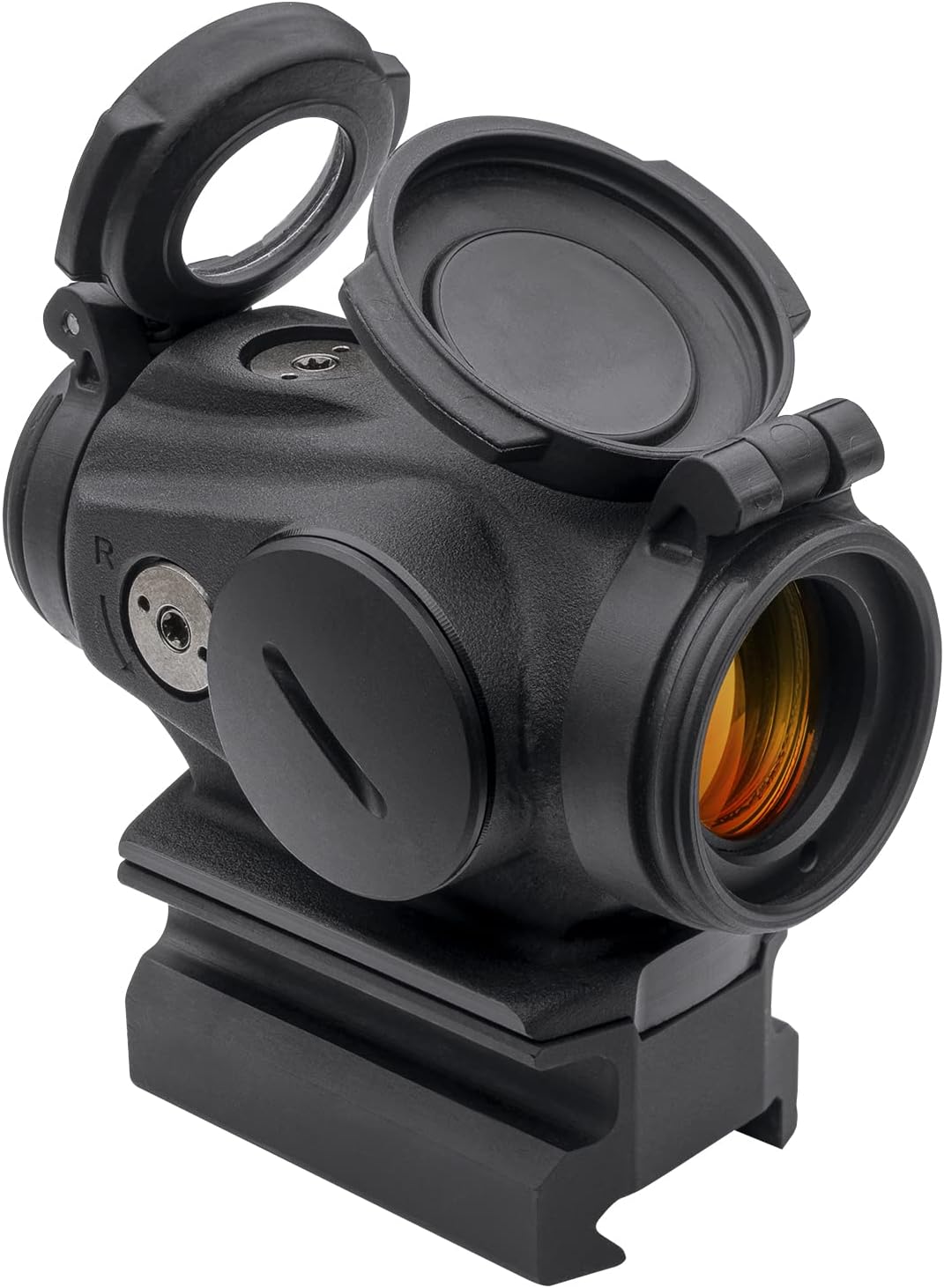
Designed specifically for the law enforcement market, the Aimpoint Duty RDS offers the legendary reliability of the Micro series but at a more accessible price point. It is a compact, high-performance red dot optimized for carbines and patrol rifles where durability cannot be compromised.
Specifications:
- Dot Size: 2 MOA
- Battery Life: 30,000 hours
- Mount: Includes Torsion Nut Mount
- Settings: 10 Brightness (4 NV)
Pros:
- True 1x magnification with zero distortion.
- Flush-mounted windage and elevation turrets prevent snagging.
- High-intensity dot is visible in the brightest desert sun.
Cons:
- The 30k hour battery life is lower than the T-2.
- Brightness buttons are not as intuitive as a rotary dial.
My Hands-On Notes:The brightness buttons are digital and located on the side; they require a firm press, which prevents accidental changes but is slightly slower than a dial. The co-witness with the included mount is a perfect lower 1/3 on an AR-15 platform. The lens covers are high-quality flip-ups that stay out of the way.
What People Say Online:Most reviews compare this to the Micro T-2, noting that while it lacks the extreme battery life and some submersible depth, it performs 99% as well for a significantly lower price.
Mounting Clarity:Compatible with the Aimpoint Micro (H1/T1/T2) footprint, but the height is slightly different, so be mindful when choosing aftermarket absolute co-witness mounts.
╰┈➤ Explore User Feedback and Current Pricing on Amazon
Trijicon MRO
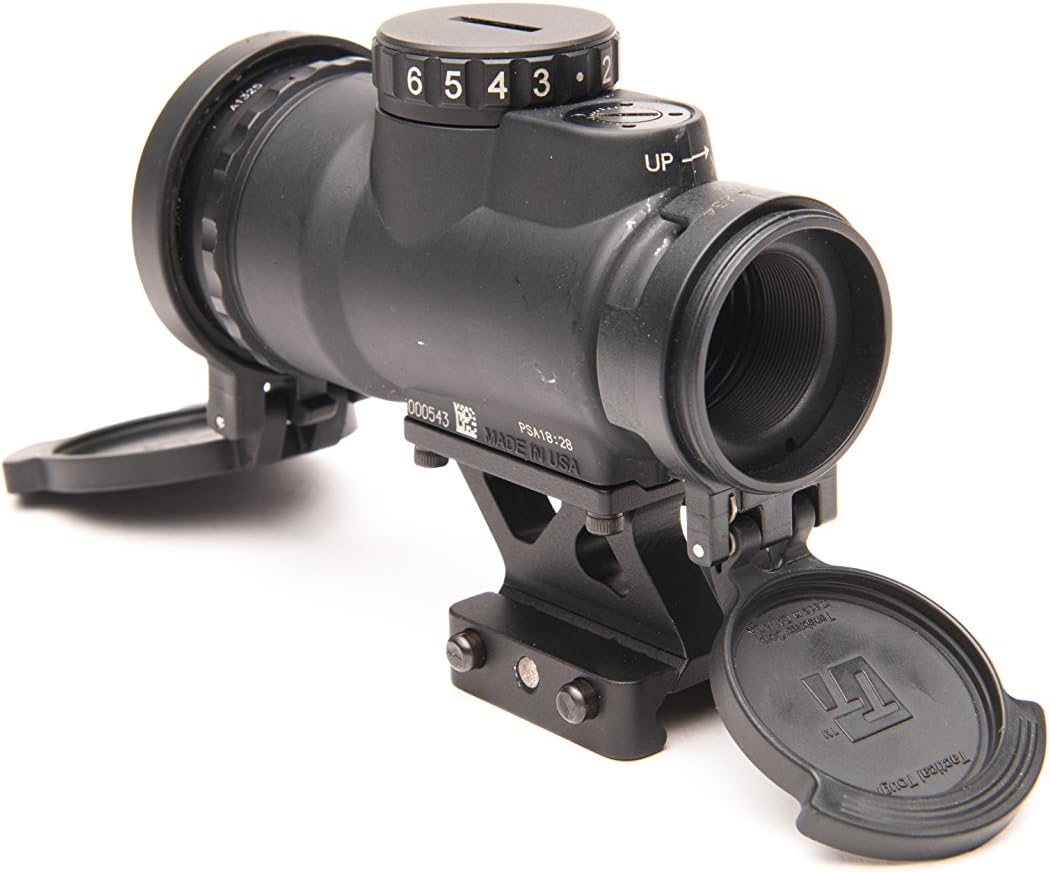
The Trijicon MRO (Miniature Rifle Optic) features a unique tapered design that creates a larger objective lens than most compact dots. This results in a "tube-free" feel, allowing for massive peripheral vision and faster target acquisition when moving through complex environments.
Specifications:
- Objective Lens: 25mm
- Dot Size: 2 MOA
- Battery Life: 50,000 hours
- Housing: 7075-T6 Forged Aluminum
Pros:
- Large window size relative to its overall footprint.
- Top-mounted brightness dial is ambidextrous and easy to reach.
- Very crisp 2 MOA dot with minimal blooming.
Cons:
- Some early units had a slight 1.05x magnification.
- Known for a blue-green lens tint.
My Hands-On Notes:The large 25mm window makes a huge difference when shooting from unconventional positions (like under a car). The dot is exceptionally sharp. I noticed the blue tint, but once I started shooting "both eyes open," the tint disappeared from my conscious vision, as intended.
What People Say Online:Users often praise the "ambidextrous" nature of the brightness knob. While there is debate about the parallax at extreme edges, most professional users find it negligible for duty distances.
Mounting Clarity:Uses a proprietary MRO footprint. A wide variety of mounts (low, absolute, lower 1/3) are available from Trijicon and third parties like Scaleworks.
╰┈➤ Explore User Feedback and Current Pricing on Amazon
Steiner MPS
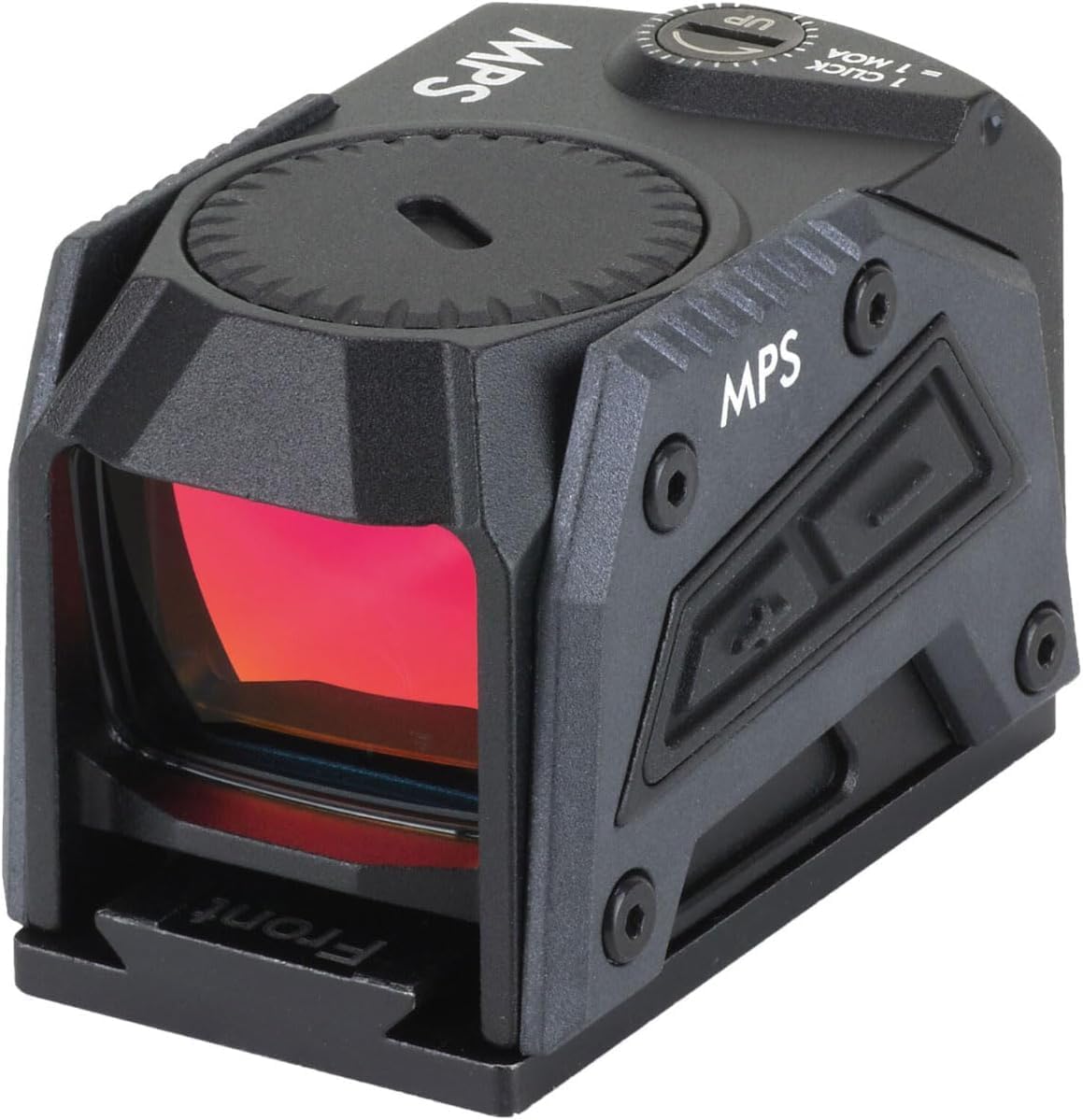
Steiner’s entry into the enclosed emitter market, the Micro Pistol Sight (MPS), brings battle-hardened European engineering to the handgun. It features a recessed window and a reinforced metal roof that can withstand immense downward pressure, making it ideal for duty use.
Specifications:
- Dot Size: 3.3 MOA
- Battery Life: 13,000 hours
- Auto-Off: 13-hour timer (selectable)
- Mount: Acro Footprint
Pros:
- Incredibly rugged housing with reinforced top ribs.
- The glass is among the clearest in the enclosed category.
- Top-mounted battery for easy access.
Cons:
- Battery life is significantly shorter than Aimpoint or Holosun.
- The "auto-off" feature can be annoying if not managed.
My Hands-On Notes:The glass quality on the MPS is spectacular—nearly zero tint and no distortion at the edges. The buttons are tactile and protected by the housing to prevent accidental activation. It sits lower than the Acro P-2, which allowed me to use slightly lower iron sights for a cleaner co-witness.
What People Say Online:Reviewers frequently mention the Steiner's superior glass as the deciding factor. While the battery life is a common complaint, most duty users solve this with a proactive annual battery change schedule.
Mounting Clarity:Uses the Acro footprint. It fits perfectly on any plate or slide cut designed for the Aimpoint Acro series.
╰┈➤ Explore User Feedback and Current Pricing on Amazon
How I Tested / Evaluation Criteria
- Parallax: I tested each optic by securing it in a vice and moving my head across the window to observe dot shift on a target 25 yards away. Duty optics must show minimal shift to ensure accuracy in high-stress, off-center eye alignments.
- Co-witness / Deck Height: I mounted each optic to a standard Glock 17 MOS or AR-15 and measured which iron sight heights were required. Low deck heights are preferred for handgun optics to maintain a natural point of aim.
- Durability: Each unit was subjected to "racking" drills against a wooden barricade to simulate emergency slide manipulation. I also exposed them to varying temperatures to check for internal fogging or electronic failure.
- Battery: I evaluated the ease of battery replacement (top/side vs. bottom) and verified the brightness levels. I look for optics that can stay on at a medium setting for at least one year.
- Brightness Range: I tested the optics in pitch-black conditions with NVGs and in high-noon desert sunlight. A duty optic must be "daylight bright" without blooming excessively.
- Glass Quality: I checked for lens tint, edge-to-edge clarity, and "fish-eye" distortion. Clearer glass reduces eye strain and improves target identification in low-light environments.
- Controls Ergonomics: I operated all buttons and dials while wearing heavy tactical gloves. Controls must be tactile enough to feel through the material but recessed enough to avoid accidental adjustment.
- Mounting Ecosystem: I researched the availability of third-party plates and mounts. A duty optic is only as good as its connection to the firearm, so footprint popularity is a major factor.
How to Choose the Right Red Dot for This Gun
Choosing the right optic depends heavily on your specific deployment environment. If you are a patrol officer in a region with heavy rain, snow, or dust, an enclosed emitter like the Aimpoint ACRO P-2 or Steiner MPS is almost mandatory. These designs prevent the "starburst" effect that occurs when a drop of water lands on an open LED emitter. However, enclosed optics are bulkier and may require more specific holsters (like the Safariland 6000 series with optic hoods).
For those prioritizing a low-profile setup or concealed carry, open emitters like the Trijicon RMR Type 2 remain a top-tier choice. They are lighter and generally easier to conceal while offering legendary durability. You must, however, be disciplined about cleaning out pocket lint or debris that can settle near the emitter.
Finally, consider the mounting footprint. The RMR footprint is the most universal, while the Acro footprint is becoming the standard for enclosed sights. If your department or personal firearm is already milled for a specific pattern, it is often safer to choose an optic that fits natively rather than relying on multiple adapter plates, which can introduce more points of failure. Always prioritize a "direct-to-slide" fit whenever possible for maximum structural integrity.
FAQs
- Why do duty red dots cost so much more than budget ones?Duty optics use higher-grade aluminum or titanium, better lens coatings, and reinforced electronics to survive thousands of rounds of recoil and physical abuse that would break a "range-only" dot.
- Is a 2 MOA or 6 MOA dot better for duty?2 MOA is better for precision at distance (rifles), while 3–6 MOA is often preferred for handguns because it is faster for the eye to track during rapid fire.
- Do I really need an enclosed emitter?If you work in an environment where your gun will be exposed to rain, mud, or thick dust, yes. For indoor security or CCW, an open emitter is usually sufficient.
- Will these optics work with night vision?Yes, all the optics listed above have specific "Night Vision" (NV) settings that dim the dot low enough to prevent "blooming" through a PVS-14 or similar device.
- How often should I change the battery?Regardless of the "50,000 hour" claim, most professionals change their duty optic batteries once a year (usually on their birthday or New Year's Day) to ensure 100% reliability.
Conclusion
Selecting the best duty red dot is an investment in your safety and your ability to perform under pressure. Whether you choose the rugged simplicity of the Trijicon RMR or the advanced protection of the Aimpoint ACRO, ensure you train extensively with your choice to master the "draw to dot" transition. Settle for nothing less than professional-grade reliability.